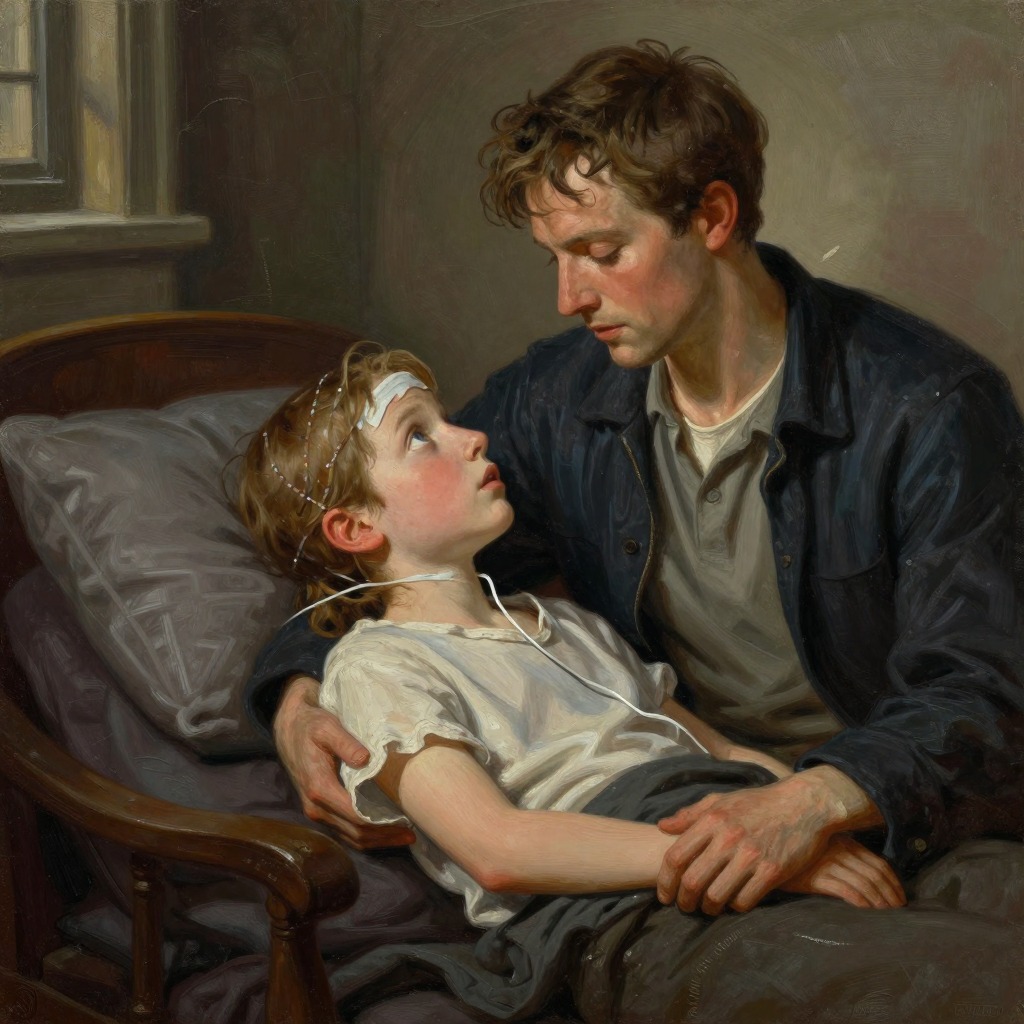
Counterinsurgence 2: The Price of Dawn
Counterinsurgence 2: The Price of Dawn is a first-person-shooter video game that becomes a vital shared space for Augustus Waters, Isaac, and Hazel Grace Lancaster. More than a pastime, the game functions as a stage for Augustus's compulsive need for heroic sacrifice, a pressure valve for Isaac's grief, and a site of intimate connection between the two boys and Hazel. Its narrative of endless war and the possibility of meaningful death within a fictional world provides a stark contrast to the characters' real struggles with cancer, where heroism is ambiguous and death carries no glory.
Gameplay and Shared Experience
The game is played cooperatively, with the screen split to show each player's point of view. Augustus and Isaac spend hours together in the bombed-out modern city of the game, fighting terrorists and saving fictional schoolchildren. The gameplay is intensely precise; their shooting is described as "astonishingly precise, as it had to be, lest they fire into the school." The game's world is one of perpetual conflict, where new wars start even before old ones are won, a structure that appeals to Augustus's desire for a never-ending battle. Hazel, having read the The Price of Dawn series, is familiar enough with the game's tactics to offer advice, such as suggesting they "go over the bridge and circle back."
Augustus's Metaphorical Heroism
For Augustus, Counterinsurgence 2 is not merely a game but a stage for enacting his deepest fears and aspirations. He plays with a "completely suicidal" style, according to Isaac, aggressively prioritizing the rescue of civilians over winning. In one pivotal session, when a grenade lands near the school where children are held hostage, Augustus's character dives onto it, shouting, "YOU CAN'T KILL MAX MAYHEM!" His character is dismembered, but he smiles, declaring, "Saved the kids." When Hazel points out the salvation is only temporary, he retorts, "All salvation is temporary. I bought them a minute. Maybe that's the minute that buys them an hour, which is the hour that buys them a year. No one's gonna buy them forever, Hazel Grace, but my life bought them a minute. And that's not nothing." This moment crystallizes his philosophy: that even a small, sacrificial act within a meaningless universe can hold value. The game allows him to experience the heroic death he craves, a death with clear purpose and immediate consequence, unlike the slow, inglorious death he faces from cancer.
A Space for Grief and Connection
The game also serves as a crucial outlet for Isaac's pain. After his girlfriend Monica breaks up with him and he goes blind, Isaac plays Counterinsurgence 2 while sobbing uncontrollably, his tears streaming down his face as he pounds the controller. Augustus uses the game to draw Isaac out of his despair, engaging him in the shared mission and teasing him back into conversation. The game becomes a container for Isaac's rage and sorrow, a place where he can scream and fight alongside his friend. Later, after Augustus's cancer returns, the game becomes a quieter space for their final days together. They play on the bare mattress, but Augustus is too weak and tired to play well, and they both die repeatedly. The game, once a realm of glorious sacrifice, becomes a mirror of their shared exhaustion and impending loss.
Contrast with Real-World Suffering
The game's narrative of clear-cut enemies and meaningful sacrifice stands in stark opposition to the characters' real lives. Augustus laments that in his own battle with cancer, he doesn't even "get a fight." The cancer is made of him, a civil war with a predetermined winner. The game offers a world where valor is possible, where a death can be a victory. This contrast underscores the novel's central theme: the search for meaning and heroism in a world that often provides neither. The game's artificiality allows Augustus to practice the kind of death he wishes he could have, while the real world offers only the slow, painful, and undignified reality of terminal illness. The game, in its own way, becomes a tool for processing the unbearable, a digital rehearsal for a tragedy that cannot be rehearsed.